

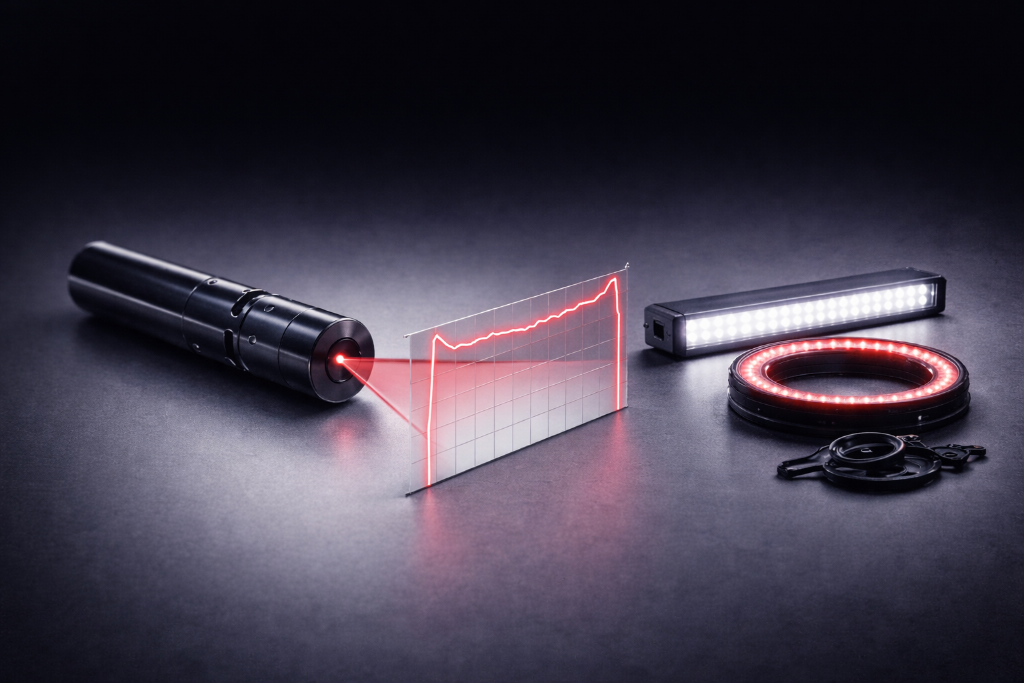
Illumination & Laser Systems for Demanding Applications
Illumination sits at the foundation of the vision stack. It defines contrast stability, feature detectability and 3D measurement accuracy.
In many advanced inspection systems, the limitation is not the sensor, it's the interaction between light and material. Surface reflectivity, geometry, working distance and wavelength absorption all impose physical constraints.
Laser projection and engineered illumination become necessary when inspection moves beyond simple intensity imaging into high-speed line scanning, 3D triangulation, spectral inspection or long working-distance applications.
We approach illumination as a system architecture decision, not a commodity accessory.
When standard illumination fails, precision optical design becomes critical. At Laser 2000, we help OEMs, system integrators and machine builders select and integrate engineered lighting architectures that solve complex inspection challenges, not simply specify commodity lighting components. We approach illumination as a system architecture decision, not a commodity accessory.
What Problems Does Illumination & Laser Systems Solve?
- •High-speed production where exposure time limits conventional lighting
- •Reflective, dark or transparent surfaces that defeat diffuse illumination
- •True 3D measurement requiring stable, uniform laser projection
- •Long working distances where intensity fall-off becomes critical
- •Wavelength-specific inspection (UV, VIS, NIR, SWIR) where standard lighting is ineffective
- •Synchronised line-scan systems where timing and uniformity are essential
These are physics constraints — not software problems.
Where Illumination & Laser Projection Excel
- •High-speed inline line-scan inspection
- •Laser triangulation and 3D profiling
- •PCB and semiconductor inspection
- •Robotic guidance and pick-and-place systems
- •Optical sorting and material classification
- •SWIR and spectral inspection architectures
Properly engineered lighting transforms unstable detection into production-grade reliability.
Our Core Technology Partners
Laser 2000 works with carefully selected specialist manufacturers, each addressing a specific layer within the advanced vision stack.
Precision laser illumination and structured projection systems for 2D and 3D machine vision
OSELA systems are engineered for demanding applications requiring precise laser projection, structured illumination and beam shaping in high-speed production, 3D measurement and robotic guidance systems.
LED Illumination Solutions
Rather than positioning LEDs as a single branded product line, we specify application-appropriate industrial LED lighting based on geometry, wavelength and integration requirements. This may involve multiple specialist lighting partners depending on spectral range (UV–SWIR), thermal constraints and mechanical integration. This approach ensures optical performance is defined by application needs — not catalogue limitations.
Example Applications
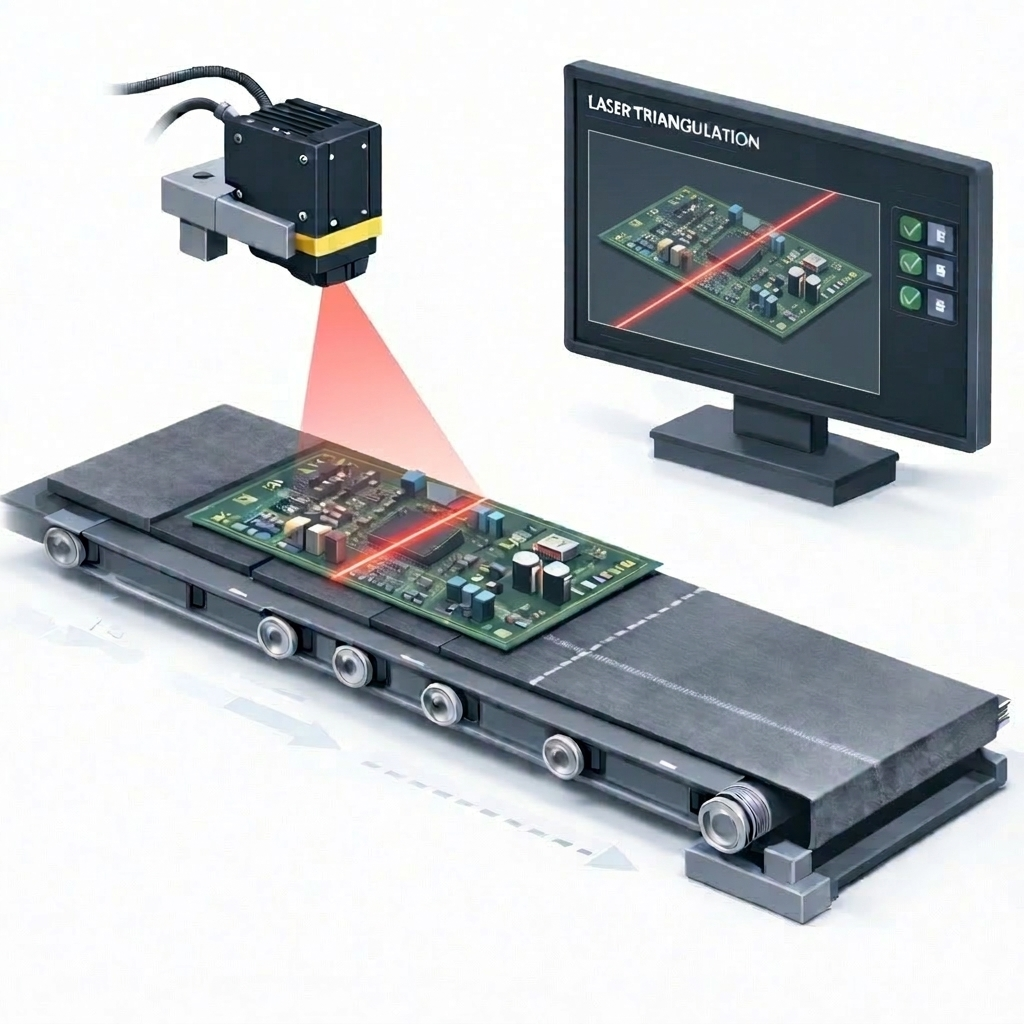
3D Machine Vision
Uniform laser line projection enabling accurate 3D profiling in rail inspection, surface metrology and precision measurement systems.
Find out more: 3D & Depth Techniques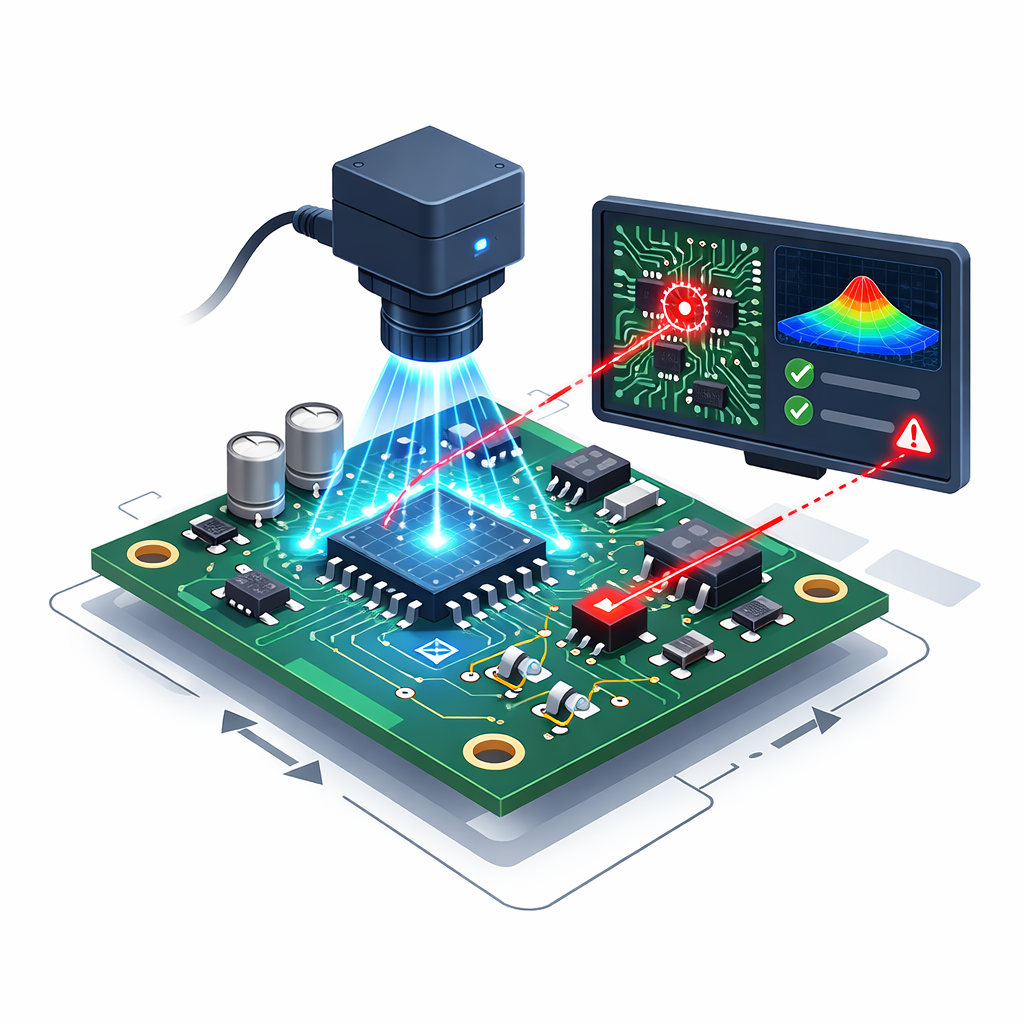
PCB & Microelectronic Inspection
Structured illumination enhancing contrast and enabling depth-sensitive inspection of solder joints, bond wires and fine geometries.
Find out more: Defect & Quality Inspection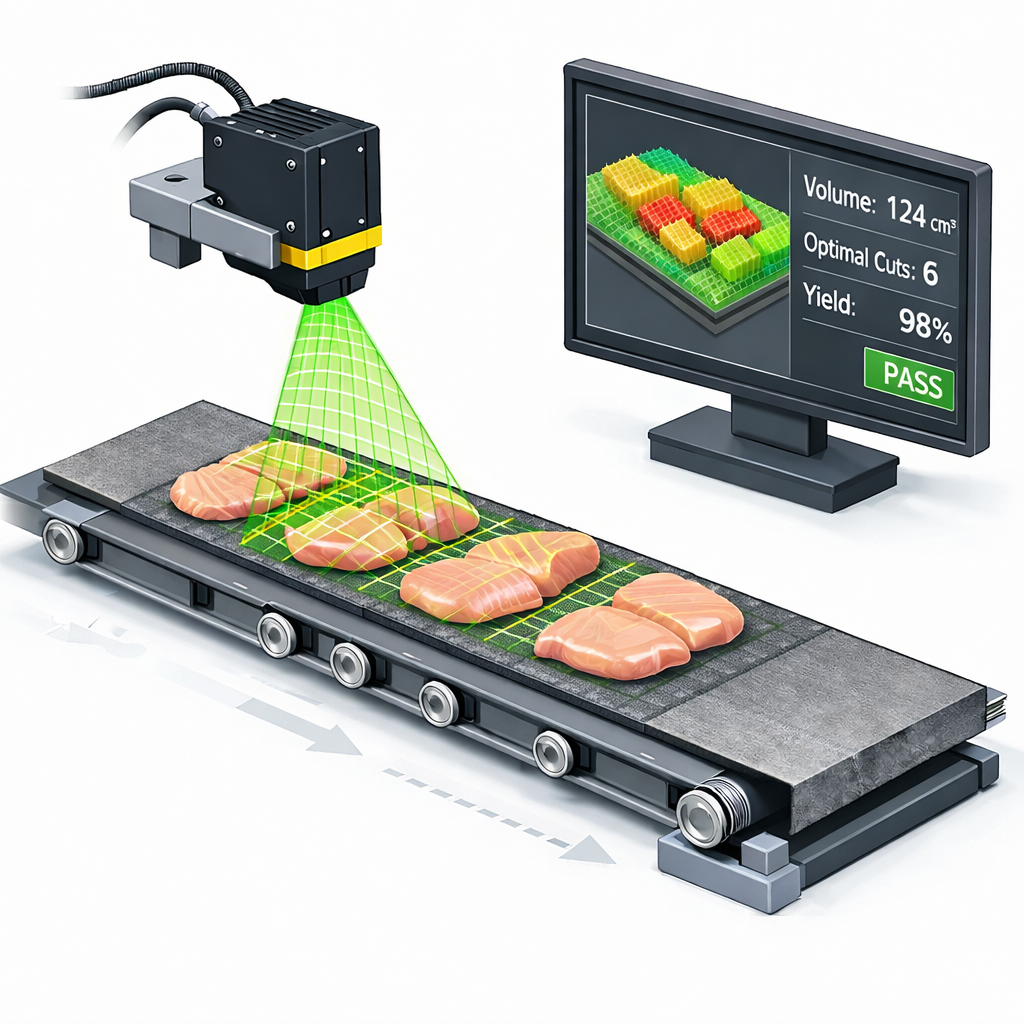
Product Conformity in the Food Industry
Customisable laser pattern projection enabling dimensional conformity checks, ingredient distribution monitoring and real-time volumetric optimisation for high-speed food portioning and slicing systems.
Find out more: Measurement & MetrologyImaging Techniques Dependent on Illumination Strategy
Illumination geometry and wavelength selection frequently determine inspection success.
Our lighting and laser systems support:
- •Structured Illumination for contrast enhancement and surface profiling
- •Dark Field Illumination for scratch and contamination detection
- •Polarisation Imaging for glare suppression on reflective surfaces
- •Laser Triangulation for precision 3D measurement
Optimising light behaviour often resolves inspection challenges before software adjustments are required.
Beyond Illumination
Illumination does not operate in isolation.
Advanced inspection systems rely on the interaction between projection geometry, motion stability, sensing performance and data transport integrity.
System integrators typically combine:
- •Laser projection and structured lighting
- •Motion and synchronisation platforms
- •Robotic positioning systems
- •Deterministic data transport and connectivity
- •Laser safety and compliance frameworks
Laser 2000 supports system integrators and OEM machine builders in selecting and aligning these technologies, ensuring illumination, motion and sensing components are specified coherently within the wider system architecture.
Deterministic performance is achieved through correct component selection and architectural alignment, not individual parts in isolation.